
THE WARMTH OF HYGGE: DESIGN FOR WELLBEING THE DANISH WAY
The 2026 World Happiness Report just landed, and Denmark is sitting comfortably in the top three — as it has, almost without fail, for over a decade. Strong institutions, social trust, low inequality: yes, all of that. But the Danes also have another ingredient I keep coming back to, something harder to measure.
You have likely heard of the concept called hygge (pronounced hoo-gah). It’s an idea that doesn’t translate neatly into English — “cosiness” gets close, but it undersells it. Hygge is really about the feeling of being genuinely at ease: warm, present, sheltered from the world. Taking time away from the daily rush to enjoy the simple and good parts of life, together with people you care about.
And here’s what strikes me as an interior designer: hygge isn’t just a cultural phenomenon and mindset. Being completely at ease in your home is something that you can design for. It lives in the materials you choose, the light you let in (or keep out), the way a room invites you to sit down and stay, spaces that encourage moments of genuine connection or to pursue those little rituals that you love. The Danes have simply been doing this intentionally for centuries.
Here are five ways to bring more hygge into your home — not as a decorating trend that fills your home with ‘things’, but as a practice of curating more mindful moments.
01
Layer your light
The norm for new homes has become a sea of downlights providing a source of harsh overhead glare. Prioritising soft, layered lighting with multiple pools of warm light — table lamps, floor lamps, in-direct wall washing and accent led lighting — rather than one bright source flooding the room, creates more of a cosy, comfortable, hygge feel.
Why? Warm and comfortable light helps the body shift into a restorative and calm state, which can reduce stress and support better sleep.
If I’m ever asked for the single change that transforms a room most dramatically, it’s usually this: turn off the downlights, add three light sources at different heights, and watch the room become somewhere you actually want to be.
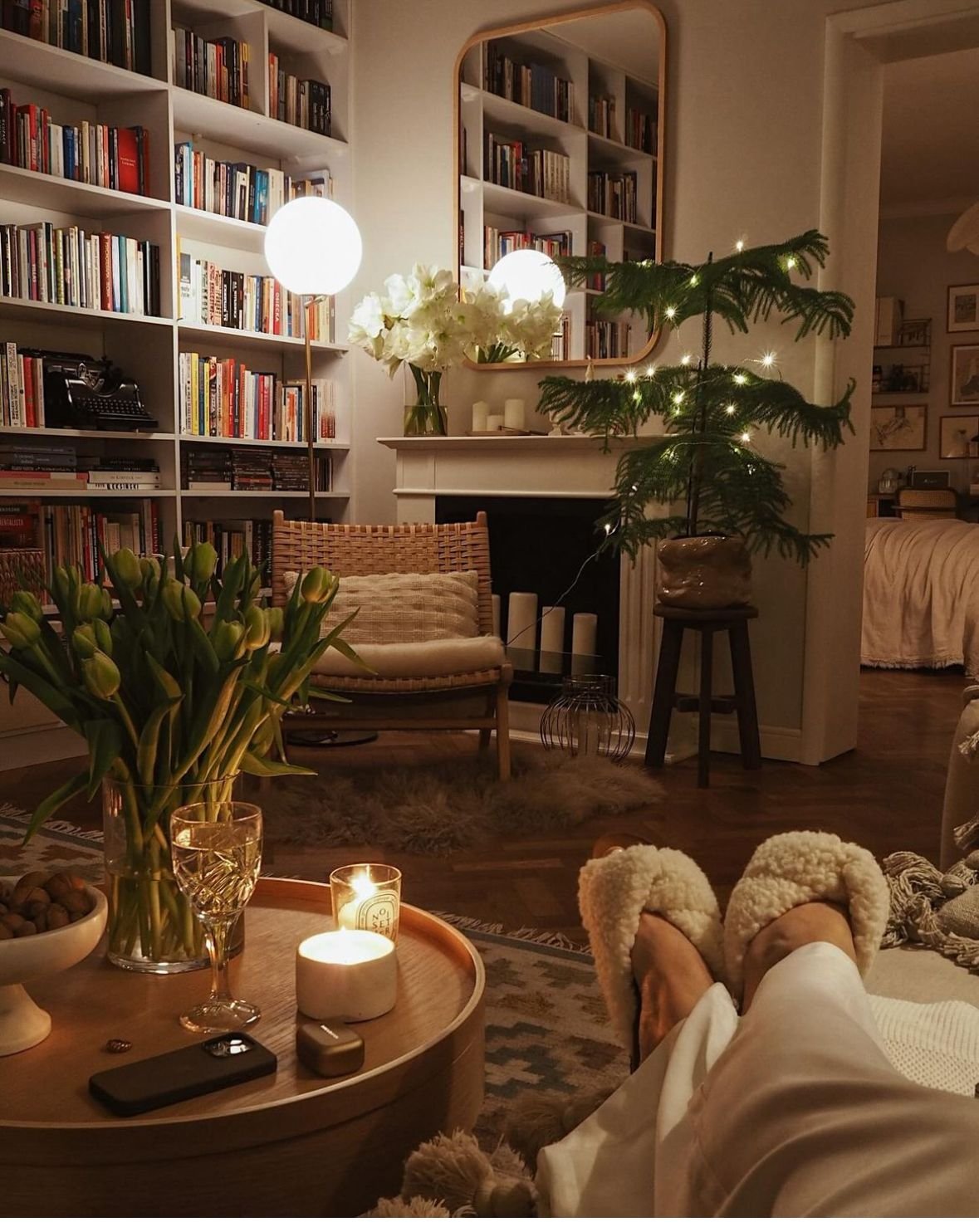
Easy DIY layered light via fairylights, lamps and candles create a moment to relax. (image via pinterest)

“The sound of silence” this library designed by Clemence Pirajean & James Michael Lees as part of the Wow! House 2025 exhibition used layered architectural lighting to help create a subdued, soft ambience.
02
Texture over perfection
Hygge interiors aren’t pristine — they’re tactile. Chunky knit throws, worn linen, materials like wood that feel imperfect. The Danes layer materials that feel good to touch, because a room you want to curl up in is always more inviting than one that looks like a showroom.
This is where I often push back against the idea that minimalism means bareness. Restraint and warmth aren’t opposites — you just have to choose your textures and materials deliberately and thoughtfully with the overall experience in mind, not just the look.
“Hygge is about an atmosphere and an experience, rather than about things.” — Meik Wiking, The Little Book of Hygge
Why? Soft textures and the imperfection of natural materials signal safety to your nervous system and encourage restorative, low-arousal activities like reading or chatting and connection with others.
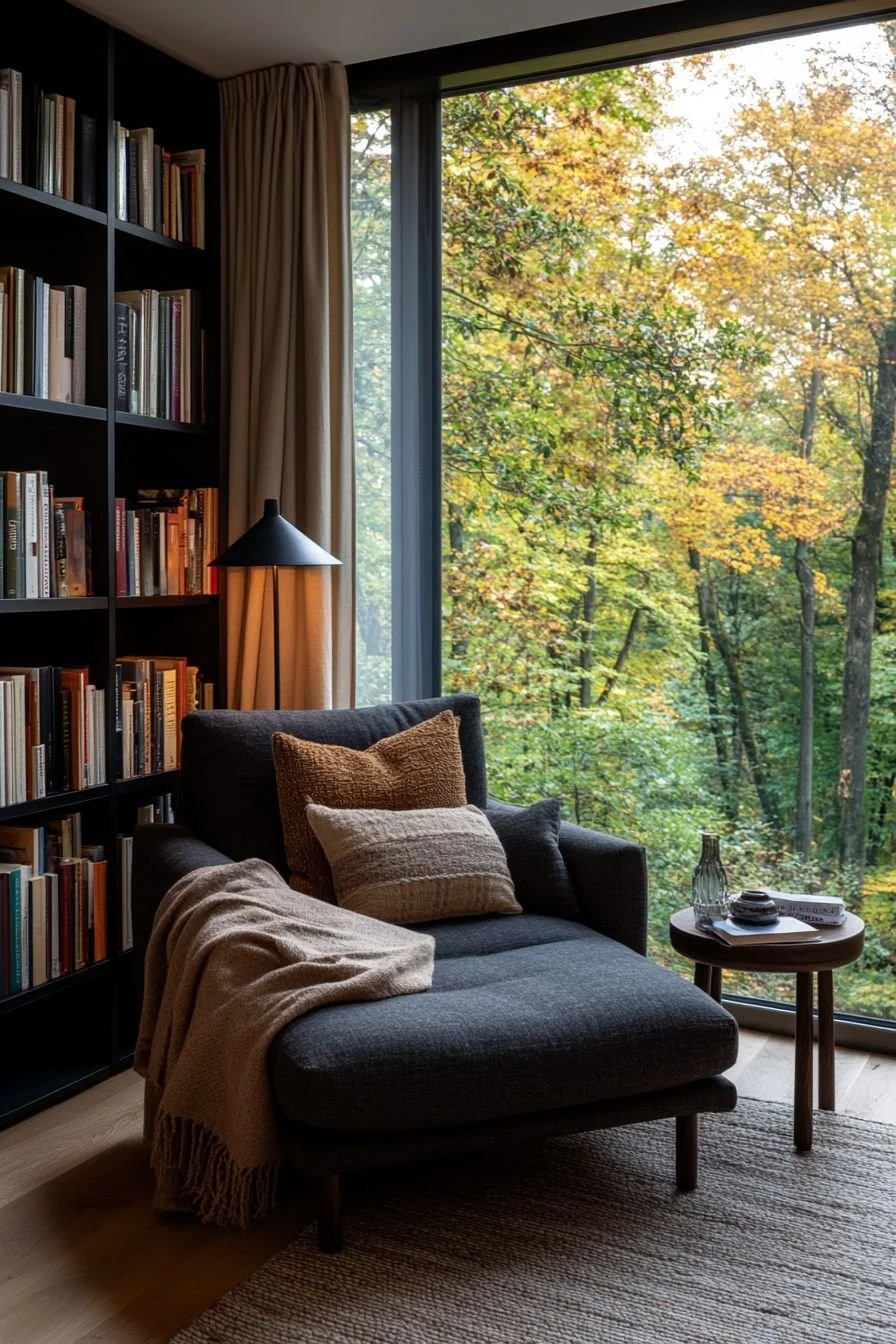
A cosy corner with textured furnishings and a view to relax. (image via pinterest)
03
Design a gathering point
Every hygge home has a place that draws people in — a kitchen table with comfortable chairs, a living room corner with enough seating to actually face each other. Hygge is inherently communal. It’s the feeling of being together without agenda.
Why? In the rush of our modern life moments of authentic, genuine connection are less frequent than we often need. Social in real life moments of deep connection have been scientifically shown to be more emotionally nourishing than sporadic texts, surface level conversations, or social media interactions. Science also shows that the way you configure and design your room will encourage or discourage these moments.
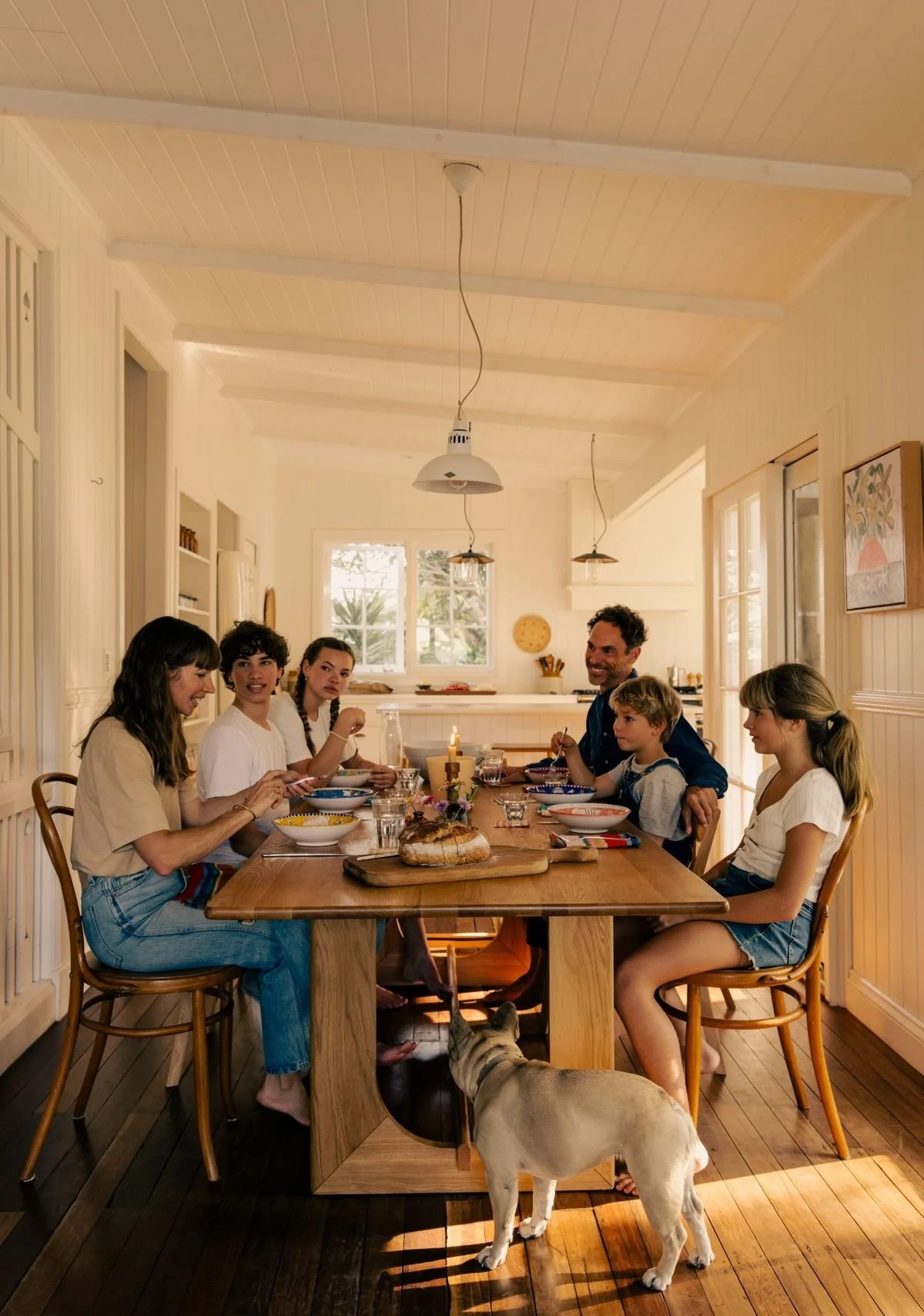
Image via Pinterest. A welcoming space for the family to gather for an informal dinner where the focus is on connection rather than perfection.
04
Bring in the natural world
Wood, stone, plants, linen, wool — hygge interiors stay connected to natural materials that age well and feel grounding. A room full of synthetic surfaces may be spotless but often feels somehow hollow. Natural materials carry a warmth that doesn’t need to be manufactured.
Even one element — a timber side table, a stone dish on the bench, a bunch of dried stems — shifts the atmosphere of a room in a way that’s difficult to articulate but immediately felt.
Why? Incorporating nature into our home and where possible, celebrating views or connection to the outdoors have a huge impact on improved mood and a sense of restoration, aligning perfectly with hygge’s am of calm comfort.
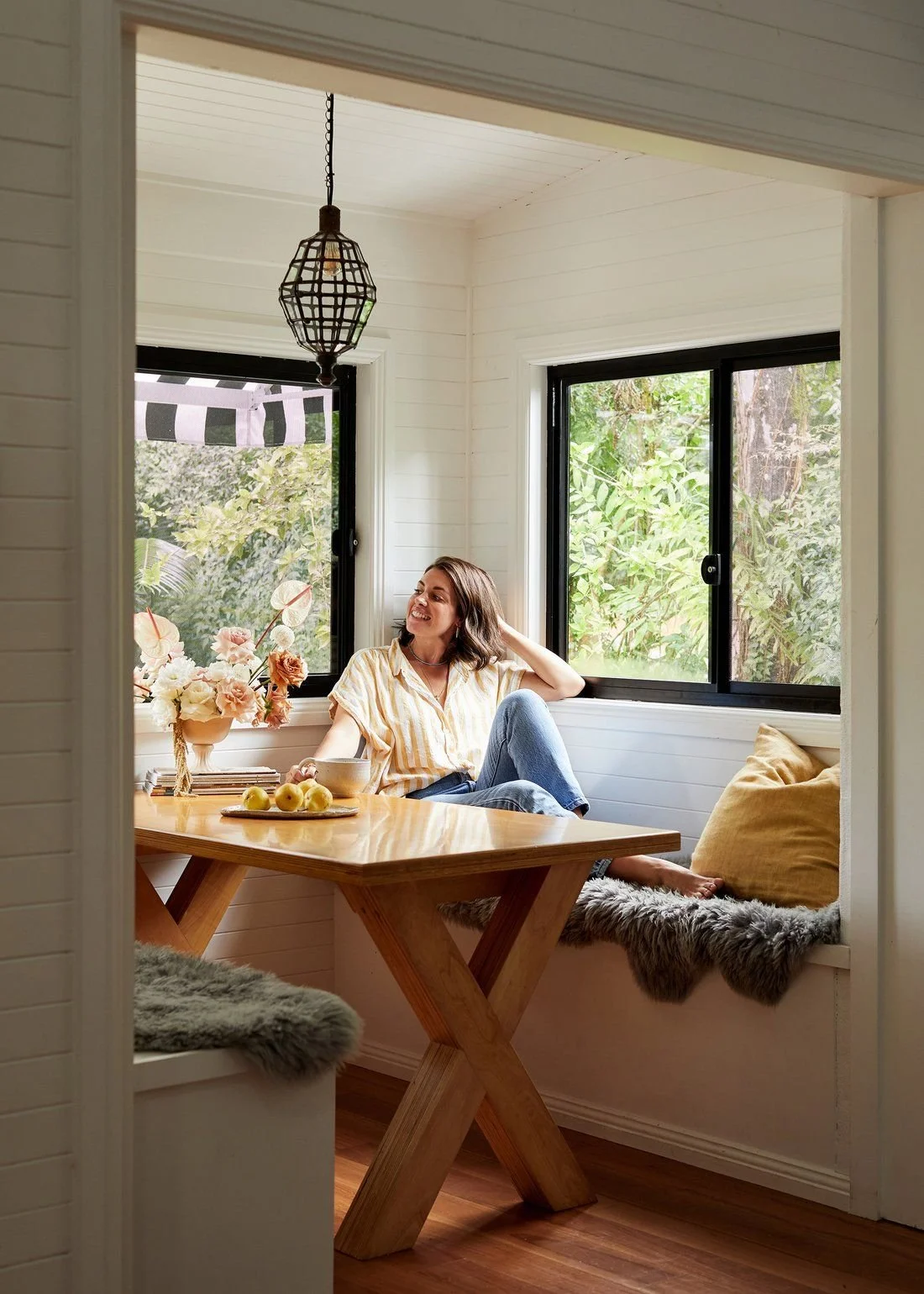
Image via Bed Threads: A cosy light filled nook with connection to the outdoors
05
Create refuge, not just beauty
This is the one that sits at the heart of hygge — and the one I think about most in my work. A home should feel like somewhere to recover, not just impress. That means uncluttered spaces, rooms that feel contained rather than exposed, and spaces that when you enter you immediately feel your shoulders relax.
Why? Visual simplicity reduces cognitive load, it helps the brain relax and improves focus. The most beautiful homes I’ve ever been in aren’t always the most photographed. They’re the ones that make you feel human. Spaces that feel lived in and loved.
A home designed around how you want to feel in it will always outlast one designed around how you want it to look, and that’s what hygge is about to me.
It’s about designing your home with intention. Asking: will this room make the people in it feel good? Not impressed. Not stimulated. Just genuinely, quietly at ease enough to notice the beauty in the everyday.
This week, I’d invite you to walk through your home with that question. Which room already has it? Which one is missing it — and what’s one thing that might shift it?
Sometimes it’s adding some softer lighting like a lamp. Sometimes it’s removing three items that add clutter, rather than comfort. Sometimes it’s bringing in a natural more organic element like a plant or vase of flowers, or a textural blanket that helps make the space feel more comfortable and inviting to spend time in.
Then, for bonus points, see if you can give yourself 10-15 minutes each day to sit in your curated space with a hot drink and your phone out of reach, treating it as a small daily wellbeing ritual. A gentle daily anchor to remind you that these small everyday moments are often not small at all, but little luxuries where comfort and joy are often found.
Is there a room that doesn't quite feel right in your home?
That feeling is worth paying attention to. Sometimes one conversation is all it takes to understand what a space is missing — and what to do about it.