
BEYOND HOW IT LOOKS: WHY EVIDENCE BASED DESIGN IS THE KEY TO A HOME THAT MAKES YOU FEEL GOOD
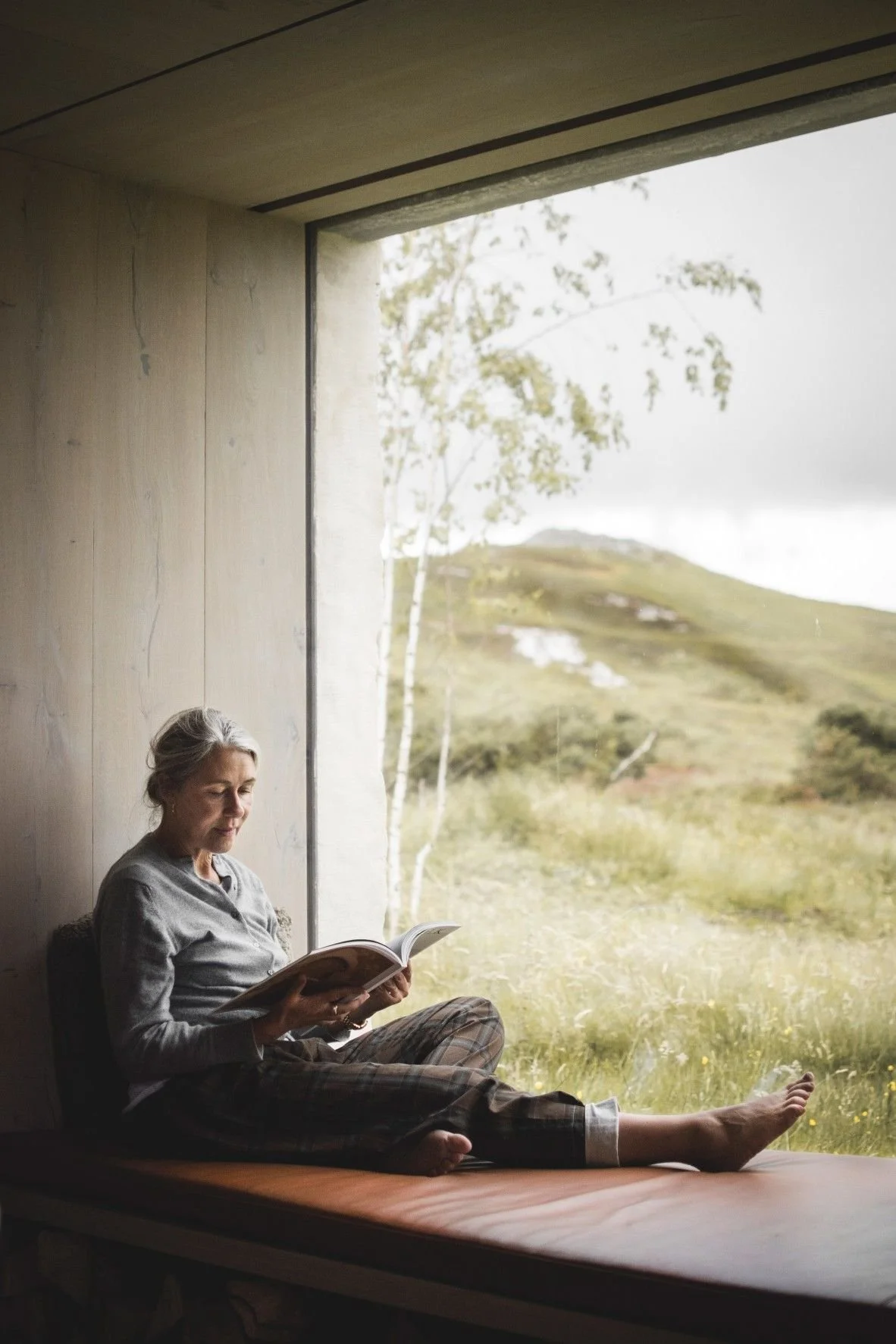
Picture via Pinterest
Think about the most beautiful space you've ever been in. I'll bet it didn't just look good — it made you feel good. Maybe it was a hotel lobby that stopped you in your tracks, a friend's home you never wanted to leave, or a space so quietly perfect you couldn't quite explain why but wanted to linger longer. That feeling wasn't luck, and it wasn't coincidence. It was design working at its deepest level — shaping your nervous system, your mood, even your behaviour, without you ever realising it.
This is what design for wellbeing is really about. Not trend led design, not aesthetics for aesthetics' sake (cue beige on beige interiors with billowing white curtains and some timber), but spaces that support you on a physical, mental and experiential level. And once you understand how it works, you'll never look at a room the same way again.
Why most design stops short
Mainstream design qualifications for interiors and architecture have historically been focused around design as decoration and form — educating how to develop the designer's key aesthetic and how to combine the elements and principles of design in a cohesive way.
The result is beautiful. Yes, but incomplete.
These spaces are typically misaligned from the outset, with designers planning for how they'll be photographed versus how they'll actually be lived in. This creates a gap between a home that looks impressive and one that is genuinely enjoyable to live in because it actually supports the person living there.
Enter the missing ingredient — the human
Wellbeing design starts with questions most designers don’t ask: who are you, what do you value, and how do you actually live? Like a good Doctor doesn’t prescribe before they listen, a human centred design process begins with empathetic listening before a single material is selected or a floor plan drawn. It begins not just by asking questions, but knowing how to ask the right ones — and truly understanding the person behind them. Their sensory sensitivities, their rhythms and behaviours, their stress triggers, what drains them and what restores them. The design of the space is formed around that blueprint, not the other way around.
What they don't teach in interior design school: Evidence Based Design
To design a healthy home — one that affords us the ability to truly live well — we need more than intuition and a good eye. There now exists a robust body of science spanning neuroarchitecture, environmental psychology and biophilic design that shows us, with increasing clarity, how spaces affect human biology, neurology and psychology.
Light, acoustics, air quality, connection to nature, sense of place, spatial flow — these go far beyond the surface level to shape how you feel, function and recover within your home every single day. You don't need to understand the research. But your designer does — and knowing how to translate that evidence into a design concept that will work with you not against you is essential to deliver the best outcome for your investment.
The cost of getting it wrong
We don't often think of our homes as something that could be making us unwell. But the research tells a different story. Damp and mould increase your likelihood of asthma or mould related illnesses like CIRS. Poor material choices and inadequate ventilation fills the air with invisible carcinogens — formaldehyde, VOCs, PFAS — that your lungs then filter with every breath. Inadequate light and chronic noise are more than just inconveniences, they are clinically linked to depression, anxiety, and cardiovascular disease. Inferior insulation makes a home uncomfortably warm or cool (and expensive to run).
These aren't extreme cases. They're happening in ordinary homes, to ordinary people who have no idea their environment is working against them. Headaches written off as stress. Fatigue blamed on a busy life. Children who can't regulate, adults who can't rest, bodies that never quite recover. We look everywhere for answers except the place we spend most of our lives.
Unhealthy spaces have a price. We just rarely connect the invoice to the address.
Health and wellbeing as infrastructure
This is why design for health and wellbeing isn't just another wellness ‘trend’ and shouldn’t just be seen as an exclusive luxury. It's a fundamentally different way of thinking about design — less about what it is, more about what it does.
When health is designed in from the beginning, through material selection, ventilation, light, acoustics and spatial flow, it becomes part of the fabric of the building itself. Always working on a subconscious level to gently support your life. Just as no-one questions investing in sound structural engineering or quality waterproofing, the impact of your environment on your physical and mental health deserves to be held to the same standard.
Not as an afterthought. Not as a finishing touch. But as infrastructure.
What becomes possible
When a space is designed with human flourishing at its centre, something quietly shifts. Your home stops working against you and starts working for you. Sleep deepens. Thinking clears. The low-level tension and micro stresses that so many people carry without realising — the noise, the air, the light that never quite felt right — begins to lift. Daily life feels easier, not because life has changed, but because the environment shaping it finally has.
This is what including evidence based design principles makes possible. Not a space designed for the visual pleasure of others, but a home designed with soul and intention for you and your family. A space that is genuinely, measurably good for the people living in it — and one that will continue to be for years to come. It's why design well, live well isn't just a tagline for us it's the ethos behind why we do what we do.
If you would like to learn more about our design approach or how we can help you to design with your wellbeing in mind we would love to hear about your project.
Or alternatively sign up to our newsletter at the link below…